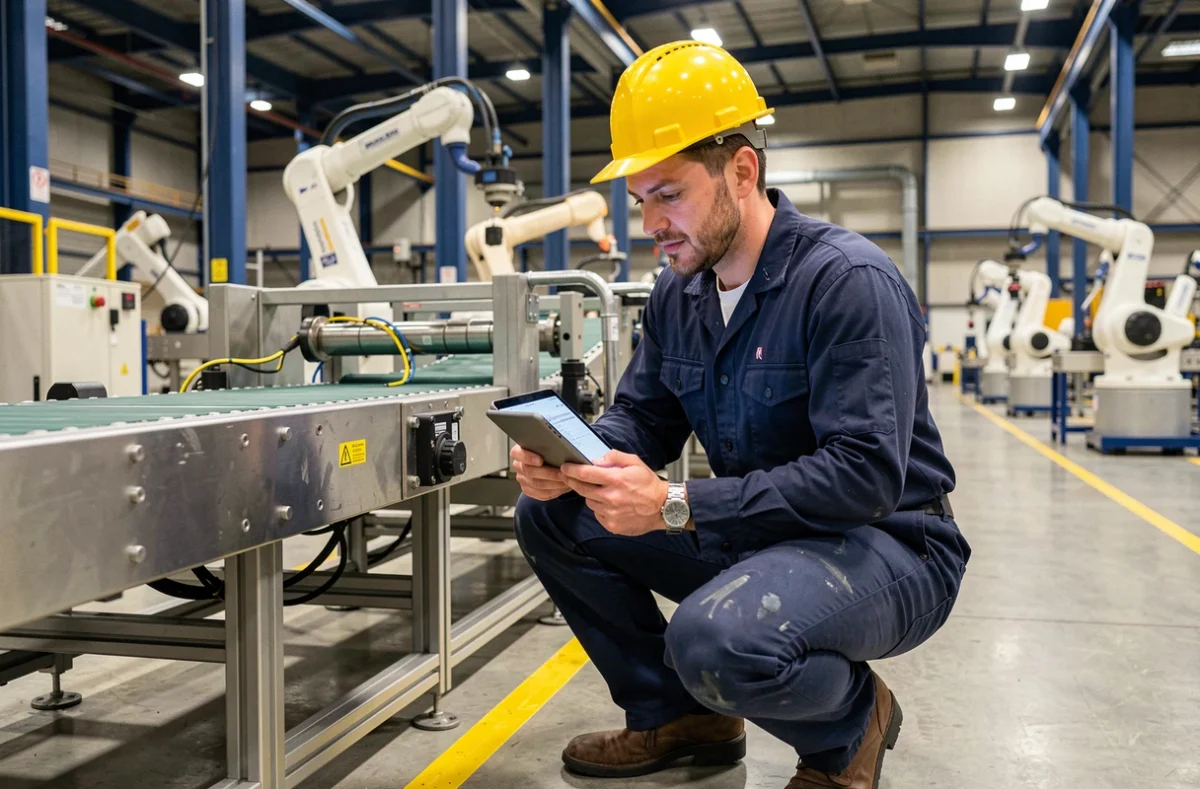
Measuring the gap between planned maintenance and actual maintenance performed helps to understand why so many factories struggle to keep their equipment running without interrupting production. A MaintainX survey conducted among 2,234 maintenance and operations managers reveals that 64% report having a preventive program, but half still spend less than 40% of their time on planned work. This discrepancy between intention and reality is the starting point for any factory maintenance strategy in 2026.
Planned time vs. actual time: the data explaining unexpected downtimes
| Indicator | Reported | Measured on-site |
|---|---|---|
| Preventive program in place | 64% of teams | Less than 40% of time spent on preventive for half of them |
This table highlights a paradox: technological tools are advancing, but operational results are not keeping pace. Staff and skill shortages are among the identified causes of this stagnation.
The challenge for manufacturers is therefore not to accumulate sensors or software licenses, but to reorganize workflows around the collected data. Before finding Airbuzz’s tips for maintenance on upskilling maintenance technicians, it is essential to understand what concretely hinders the transition from reactive to planned maintenance.
Conditional maintenance and IoT sensors: reducing interventions without stopping production
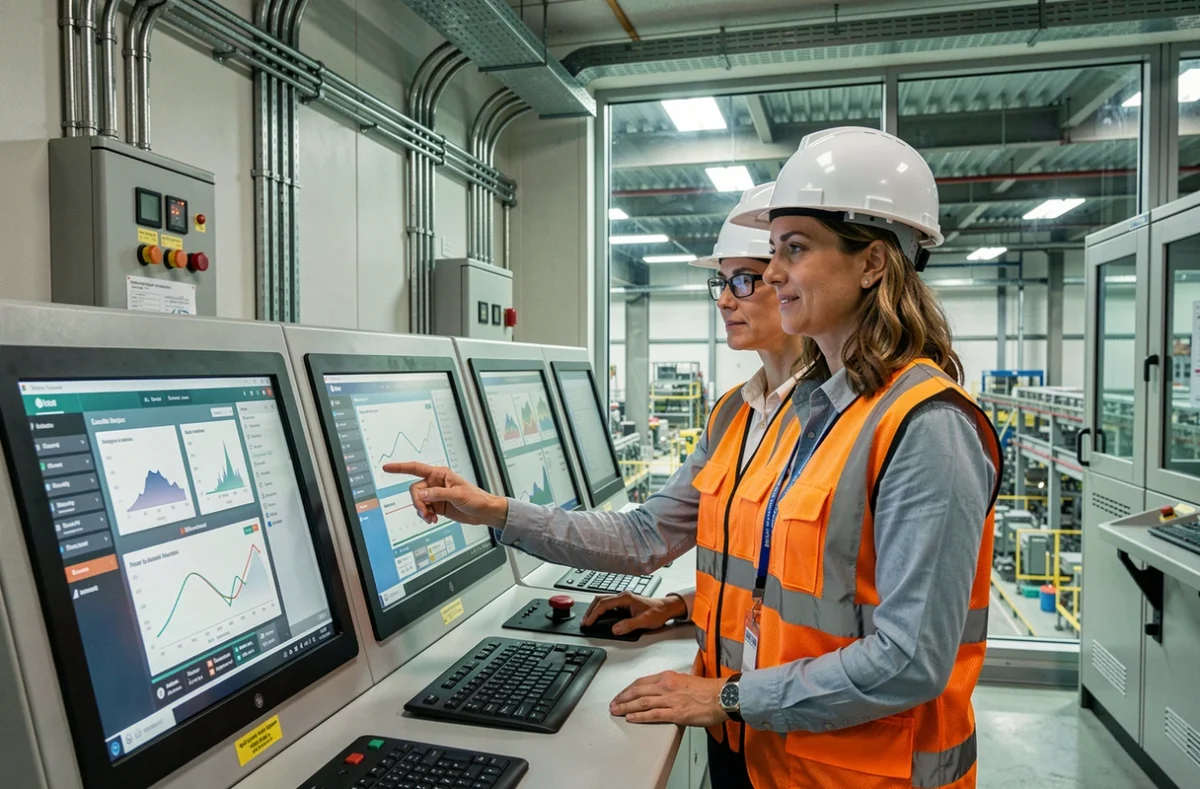
Conditional maintenance relies on continuous monitoring of physical parameters (vibrations, temperature, pressure, electrical consumption) through IoT sensors installed directly on machines. The principle is simple: intervene only when a measured threshold deviates, not according to a fixed schedule.
This approach changes the game for operating production lines. Instead of stopping a machine every 500 hours for a routine check, teams receive an alert when a bearing shows abnormal vibrations or when a motor’s temperature exceeds a critical value.
Technical conditions for effective monitoring
- Sensors must be calibrated for each type of equipment, with alert thresholds adapted to the normal operating conditions of the machine in question
- The collected data must be sent to a centralized platform (CMMS or SaaS solution) capable of cross-referencing maintenance information with production data
- Field technicians must know how to interpret alerts and have clear procedures for intervening on equipment while it is running, in compliance with regulatory frameworks
In France, Article R4323-15 of the Labor Code governs interventions on operating machines. The principle remains intervention at a standstill when a moving piece of equipment presents a risk. However, some operations may require maintaining operation when it is technically impossible to perform them at a standstill, provided strict safety measures are in place.
Lockout and tagout (LOTO procedure) remain central to any direct mechanical intervention. Maintenance without stoppage does not mean absence of rules: on the contrary, it requires documented risk analysis before each type of inline intervention.
OT cybersecurity and remote maintenance: a constraint that has become structural
The proliferation of connected sensors and remote access to management systems opens a new front: the security of operational technology (OT) systems. This issue, long treated separately from maintenance, is now a prerequisite.
The NIS2 requirements impose IT/OT segmentation, supply chain risk management, and incident notification procedures. In France, the Cyber France Reference Framework published by ANSSI on March 17, 2026, already serves as a working framework for industrial companies, although national transposition remains crucial for the obligations applicable to each sector.
In practical terms, a factory deploying predictive maintenance via IoT sensors without securing data flows between the industrial network and the IT network exposes itself to risks of a different kind of interruption. An attack on the supervision system can cause a downtime much longer than a typical mechanical failure.
Points of vigilance for maintenance teams
Network segmentation between production systems and management tools (ERP, CMMS) must be verified with each addition of a sensor or remote access. Firmware updates for connected equipment are part of the maintenance scope, not just the IT department’s.
Incident notification procedures (detection within 42 days, notification within 24 hours according to the frameworks discussed around NIS2) also concern field teams as soon as they detect abnormal behavior on an automated system or sensor.
Field skills and data management: the real bottleneck
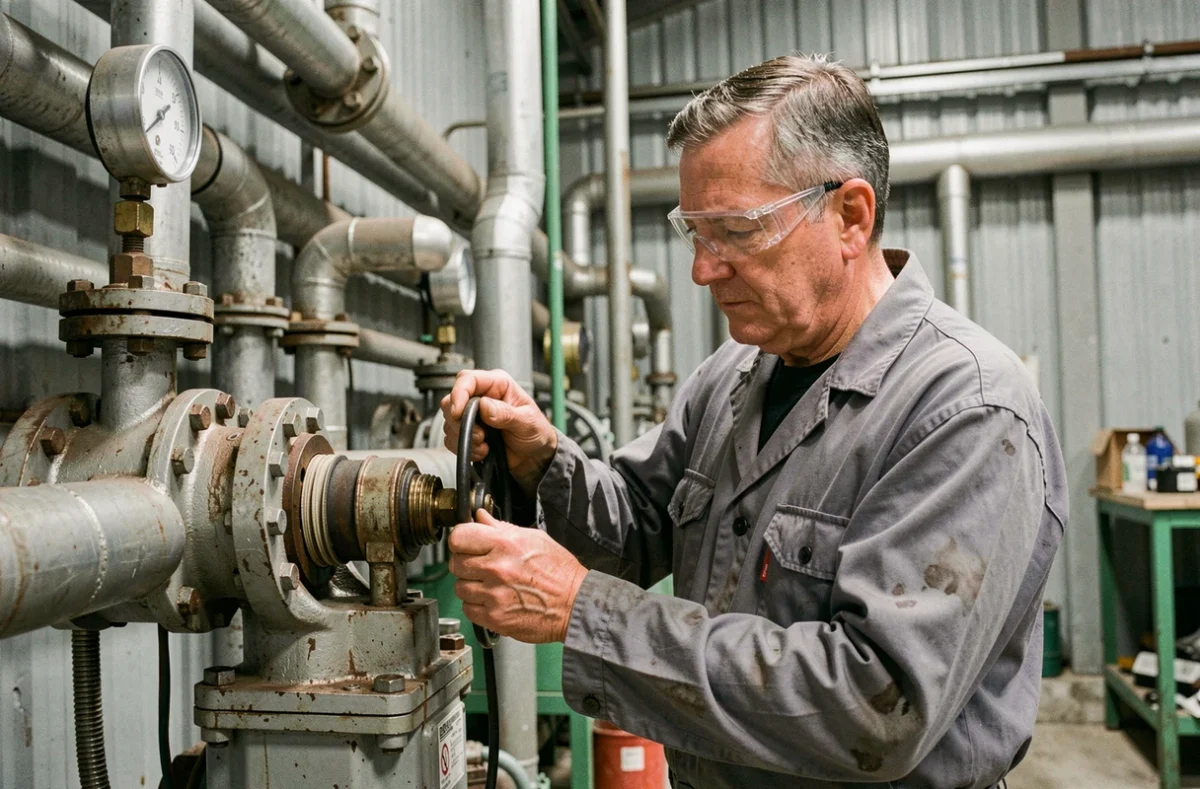
The adoption of digital tools only yields results if technicians know how to use them. The skills shortage in industrial maintenance is documented by the MaintainX survey: it is among the main causes of the persistence of unexpected downtimes despite technological investments.
A preventive program without technicians trained in data interpretation remains a disguised reactive program. Alerts accumulate, priorities blur, and teams revert to the reflex of repairing after a failure.
Centralizing data in dedicated platforms facilitates decision-making, provided that workflows are redesigned in parallel. Cross-referencing maintenance data with production data allows for identifying machines whose performance drift costs the most in product quality, not just in downtime.
The trade-off between maximum availability and maintenance cost constitutes the main risk of maintenance without stoppage. Continuous monitoring is more expensive than periodic monitoring, and not all machines justify the same level of instrumentation. The arbitration is done equipment by equipment, depending on the actual criticality for the production line.
Factories making progress on this issue in 2026 are not those deploying the most sensors, but those aligning their workflows, technician training, and system security around a measurable goal: reducing the gap between declared maintenance and actual maintenance performed.