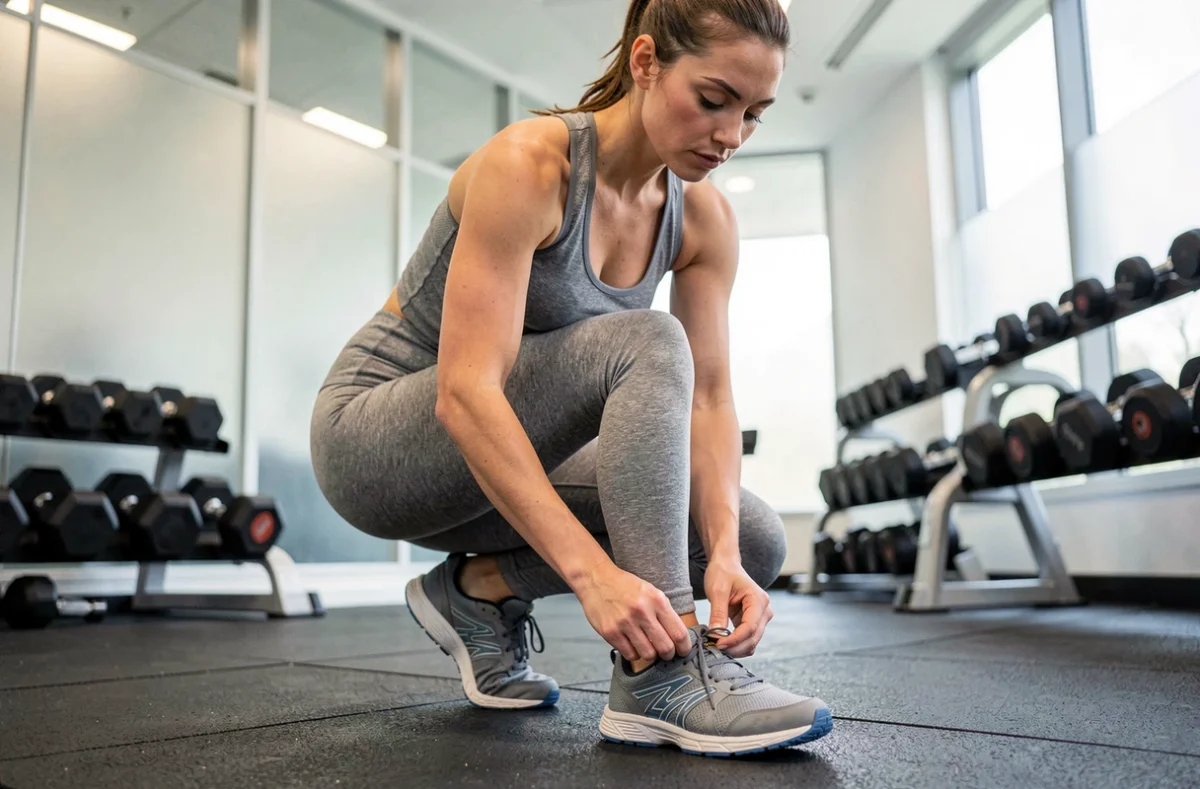
A gym shoe differs from a running shoe by a fundamental parameter: the direction of the forces it must manage. On a treadmill, the foot moves in a linear axis. In a group class, a cross-training circuit, or a squat rack, the stresses are lateral, vertical, and rotational. Therefore, the choice of shoe depends on the exact nature of the movements performed, rather than on a versatile model that is supposed to cover everything.
Drop and flat sole: what squat biomechanics really change
The drop refers to the height difference between the heel and the forefoot. On a classic running shoe, this drop often varies around several millimeters, sometimes more. On a weightlifting shoe, the heel is rigidly elevated, with an incompressible material (wood or thermoplastic).
This elevation does not automatically increase maximum strength. Biomechanical analyses show that a raised heel reduces trunk inclination and increases knee flexion during the squat. In practical terms, a person with limited ankle dorsiflexion will gain squat depth and torso verticality with a raised heel.
Conversely, a flat sole (like a minimalist shoe) promotes direct contact with the ground and better proprioception. For movements like the deadlift, where the bar must travel the shortest possible distance, the flat sole shortens this distance and stabilizes the foot on the ground.
Find our tips for choosing suitable shoes for the gym if you’re unsure between different types of soles for your sessions.
Cross-training shoes and lateral stability in the gym
Cross-training shoes are designed to absorb multidirectional stresses. Their sole is wider and flatter than that of a running shoe, with moderate cushioning that does not “eat” into stability during heavy loads. The lateral support, often absent in running shoes, limits the risk of foot twisting during lateral movements (shuffles, side lunges, box jumps).
This is the most versatile category for mixed gym practice: a bit of treadmill, a strength circuit, a few bodyweight exercises. The cross-training shoe will not be suitable for heavy squats or a half-marathon, but it adequately covers a wide range of movements.
Why running shoes pose problems with heavy loads
The cushioning foam of a running shoe is compressible by design. Under a loaded bar, this compression creates instability under the foot: the energy you transmit to the ground is partially absorbed by the sole instead of being returned. The foot “floats” slightly, which increases stabilization work and reduces direct force transmission.
For the treadmill, these same shoes remain a good choice. The problem arises when they are used for weight training exercises with external loads or for quick lateral movements, where stability takes precedence over cushioning.
Foot morphology and shoe size choice for the gym
The shape of the foot affects comfort and safety as much as the type of sole. Two criteria are often underestimated when purchasing:
- The width of the forefoot varies by brand. A forefoot that is too narrow compresses the metatarsals and can cause pain during loaded ground contact. Some brands offer “wide” versions for wider feet.
- The height of the arch influences the internal support of the shoe. A low arch often requires a model with more pronounced medial support, while a high arch demands more volume in the upper.
- The ideal size for the gym leaves about half an inch between the big toe and the end of the shoe. The foot swells slightly during exertion, and a shoe that is too snug at rest will become uncomfortable after about twenty minutes of activity.
Minimalist shoes in weight training: the limits to know
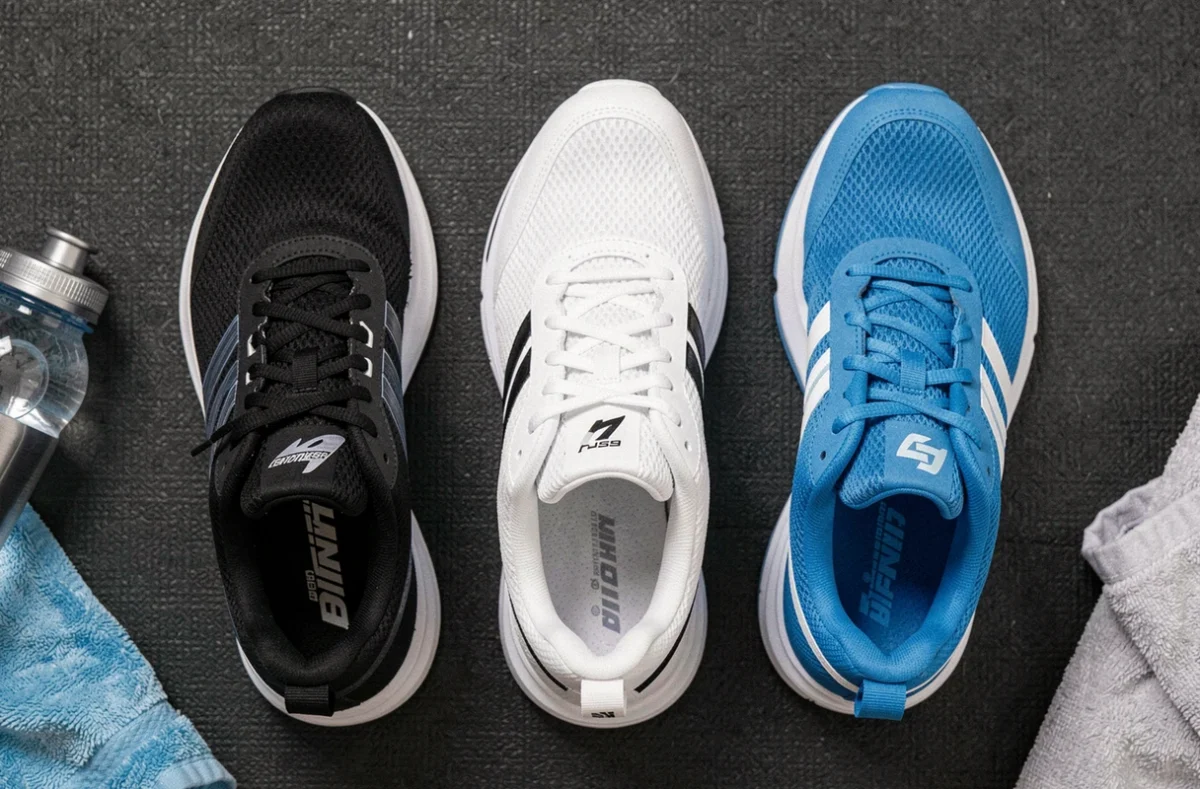
Training in minimalist shoes or barefoot appeals to some practitioners, particularly for strengthening the arch and proprioception. The transition to this type of shoe puts more strain on the calves, Achilles tendon, metatarsals, and plantar fascia, according to the work of Peters-Dickie et al. published in Clinical Biomechanics in 2025.
However, minimalist shoes are not proven to be superior for general weight training. Their interest remains specific: they are suitable for bodyweight exercises or moderate loads, for individuals already accustomed to this type of footwear. A sudden transition, without gradual adaptation, increases the risk of injury to the foot and ankle.
Adapting the shoe to each type of session
Rather than a single pair, some regular practitioners alternate between two pairs depending on the session content:
- Weightlifting shoe (rigid elevated heel) for sessions focused on squats, front squats, overhead presses.
- Cross-training shoe with a flat, wide sole for circuits, HIIT, or mixed sessions.
- Running shoe only for sessions dedicated to the treadmill or cardio endurance.
This division avoids compromising stability on loads and comfort on cardio. Investing in two specialized pairs generally lasts longer than a single versatile pair used across all fronts.
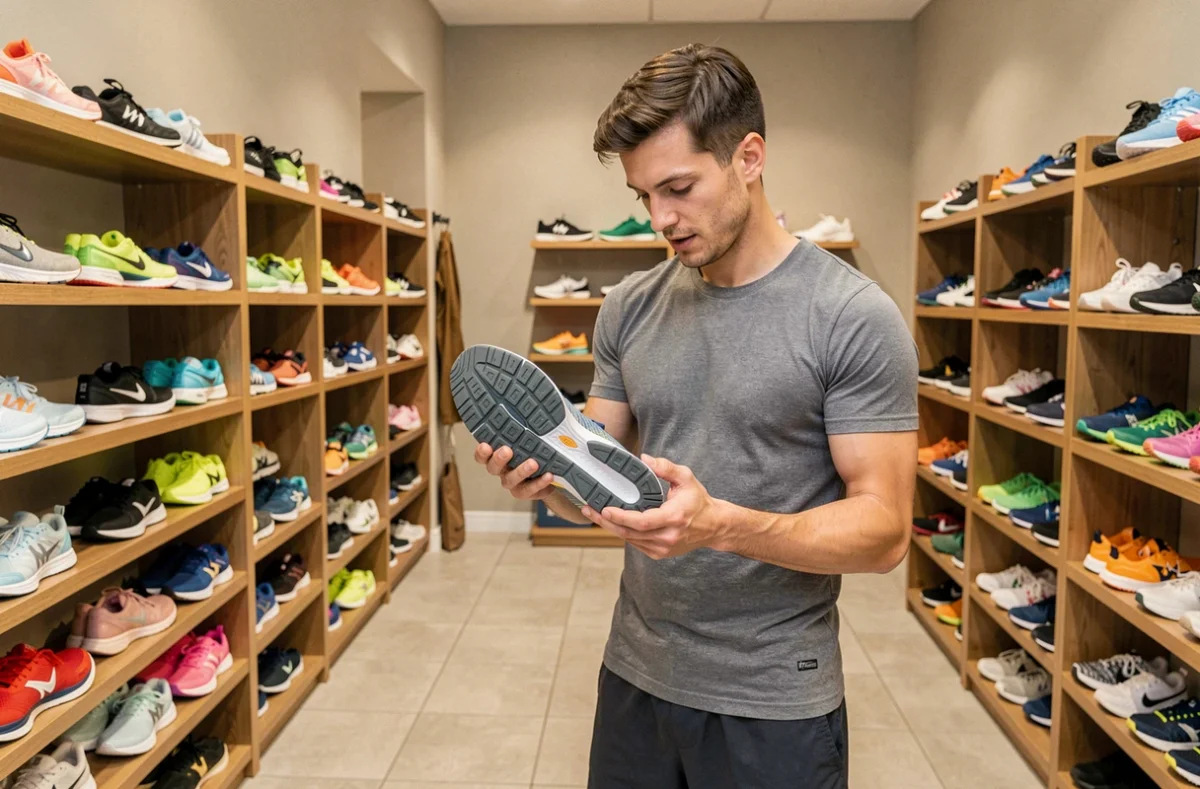
The most reliable criterion for validating a choice remains the sensation of direct contact with the ground during a unilateral support. If the foot wobbles or if the sole visibly compresses under load, the shoe is not suitable for the exercise being performed. Testing this point in-store, standing on one leg with a slight knee bend, provides a more useful indication than any technical sheet.