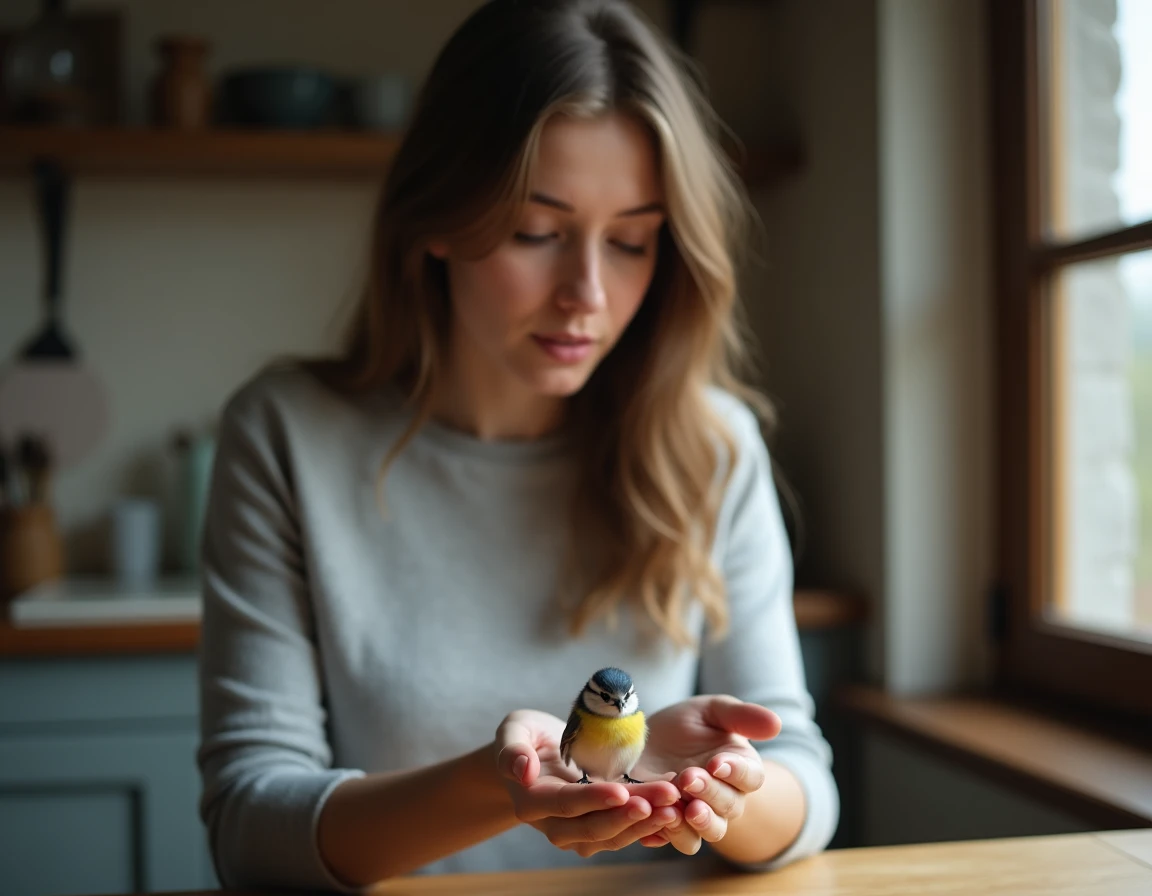
A baby tit is found on the ground, motionless, with its beak slightly open. The instinct to pick it up and feed it comes from a good intention, but every poorly calibrated gesture reduces its chances of survival. Before touching the chick, the priority is to understand its real situation: is it injured, simply out of the nest too early, or being fed by its parents a few meters away?
Tit on the ground: distinguishing a distressed chick from a juvenile learning
A young one hopping around, covered in emerging feathers, with its wings slightly spread, probably does not need help. In both great tits and blue tits, young birds leave the nest before they can fly. They spend a few days on the ground or in low bushes, being fed by adults who make discreet trips back and forth.
The real alarm signal is a naked or almost naked chick, with no feathers on its back or wings. This stage corresponds to a nestling that should never have ended up outside the nest. At this point, action is required.
To know how to feed and save a baby tit, you must first observe without intervening for about twenty minutes. If no adult returns and the chick is naked or visibly injured, intervention is justified.
Returning the tit chick to its nest or creating a substitute nest
Contrary to a widespread belief, touching a chick does not cause it to be rejected by its parents. Birds have a very limited sense of smell. Therefore, you can handle the chick without fear on this point, as long as you limit the duration of contact to avoid stressing it.
The original nest is accessible
If you locate the nest (birdhouse, cavity in a wall, tree hole), place the chick back inside. This is the most effective action. A little warming between your hands for a few seconds is sufficient before placing it down.
The nest is missing or destroyed
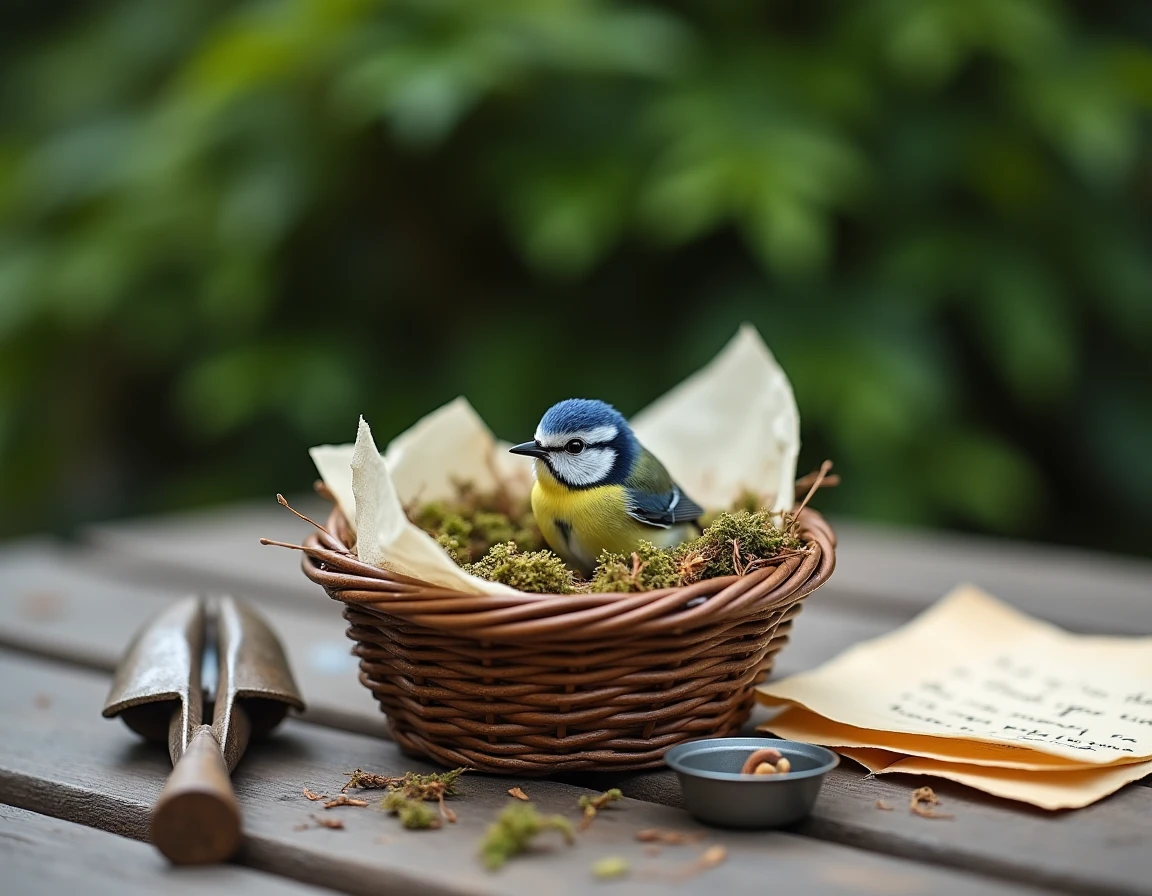
Create a substitute nest using a plastic tray with holes in the bottom for drainage, lined with paper towels or dry grass. Secure this nest high up, out of reach of predators (cat, magpie), on a branch or against the nearest wall from the discovery point. The parents, if they are in the area, will find the chick thanks to its cries.
Emergency feeding for a baby tit: what works and what kills
If no care center can be reached immediately and the chick shows signs of weakness (closed beak, lack of reaction to noise), a temporary emergency feeding can make a difference. The tit is a strict insectivore at the chick stage. Do not give it bread, milk, or seeds.
Food suitable for a tit chick
- Live mealworms, cut into small pieces if the chick is very young. They can be found in pet stores or fishing shops. This is the safest food in an emergency situation.
- Small caterpillars or spiders found in the garden, provided they come from a pesticide-free area.
- Insectivorous rearing paste, sold in pet stores, mixed with a little water to achieve a soft consistency. This is an acceptable substitute for a few hours.
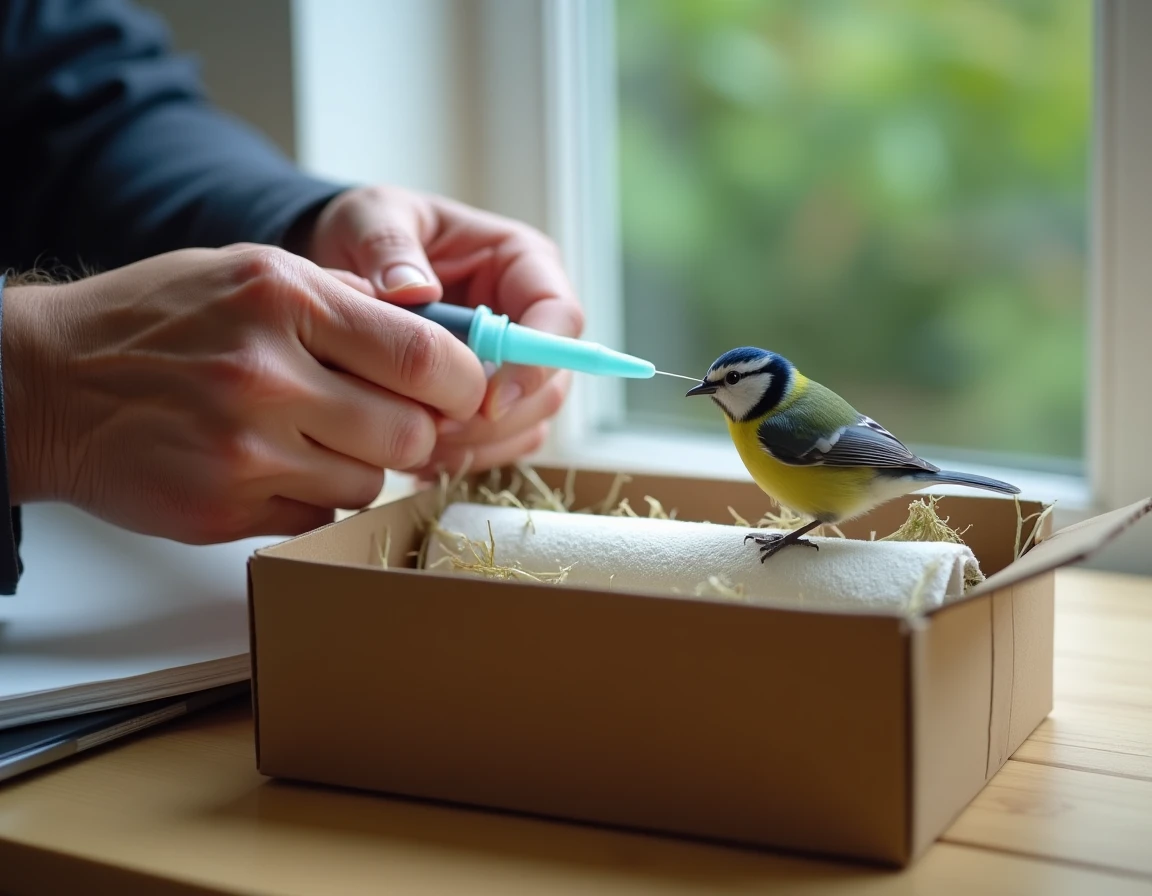
Food should be given at room temperature, gently placed at the back of the open beak with tweezers or a blunt toothpick. Feed every twenty to thirty minutes during the day. At night, let the chick rest.
The trap of forced hydration
Pouring water directly into a chick’s beak is the most dangerous action one can take. The liquid risks entering the airways and causing aspiration pneumonia, often fatal within hours. Hydration comes through food: insects and moist paste provide the water the chick needs.
If the chick appears dehydrated (wrinkled skin, sunken eyes), you can place a tiny drop of water on the outer edge of the beak, never introducing it inside. Feedback on the effectiveness of this technique varies, but it remains safe if this limit is respected.
Keeping the chick warm and contacting a care center
A naked baby tit cannot regulate its temperature. Without a heat source, it will die in less than an hour even if fed properly. Place it in a closed container (a shoebox with holes) with a soft cloth at the bottom, set on a warm water bottle or next to a hot water bottle wrapped in a cloth.
The space should remain calm, indoors, away from direct light and any noise sources. Avoid showing it to children or handling it beyond feeding.
When to transfer to a rescue center
Home feeding is an emergency solution, not a long-term plan. Keeping a wild bird without permission is illegal in France. As soon as possible, contact the nearest wildlife rescue center or the LPO (League for the Protection of Birds) through their local network. They have the appropriate rearing protocols and the necessary permits to raise the chick until it can fly.
- Call the care center before going there to confirm that they accept passerines and that a volunteer is available.
- Transport the chick in its box, keeping it warm, without food or water freely available in the container.
- Do not attempt to keep it “a few more days” to see if it survives. Each day without specialized care reduces its chances of rehabilitation in the wild.
A baby tit that is quickly taken care of, warmed, fed with suitable insects, and transferred to a care center within the day has a real chance of returning to the wild. The most helpful gesture often remains the simplest: observe before acting, and resist the urge to feed a chick that does not need it.