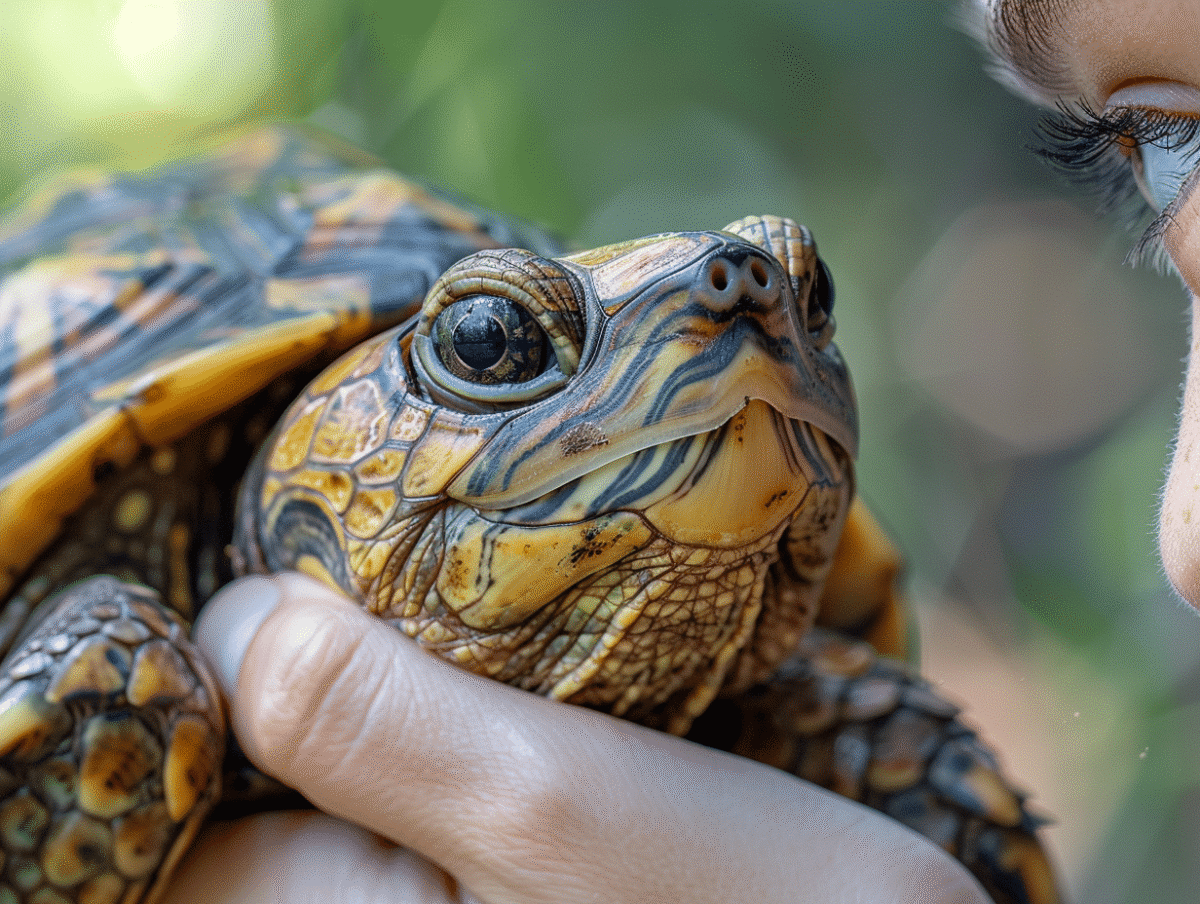
Turtles, often perceived as slow and unexpressive animals, actually hide a surprising ability: they can recognize their owners. These prehistoric creatures, which have traversed the ages with apparent indifference, develop a unique bond with those who care for them. Scientists are questioning how these reptiles, whose brain capacities are often underestimated, manage to differentiate between humans, a faculty that raises exciting questions about intelligence and memory in turtles. This remarkable ability challenges preconceived notions and opens new perspectives on our interactions with these ancestral animals.
Interactions between Turtles and Humans
The relationship between turtles and humans is complex and varied, manifesting in different forms and environments. Sea turtles, often seen during dives or in documentaries, coexist with humans in their natural habitat, while land and aquatic turtles are sometimes adopted as pets. The question arises: Does the turtle recognize its owner?? In the context of keeping animals, where turtles become domestic companions, this inquiry takes on a particular dimension.
Within turtle conservation, the protection of these species is part of a broader environmental framework. Initiatives in France, such as in Guadeloupe or Madagascar, work tirelessly to preserve nature and turtle habitats. This conservation approach often includes public awareness, teaching people to interact responsibly with these animals, whether in urban parks or during conservation programs in natural settings.
Turtles, whether marine, freshwater, or terrestrial, are subject to strict regulations regarding their keeping. In France, the environmental code sets precise limits for the keeping of non-domestic animal species. Exotic turtles, such as the European pond turtle, are protected on national territory, and their keeping must meet well-defined criteria. This includes special attention to their well-being and the reproduction of the conditions of their natural habitat.
The diversity of turtles raises questions about interspecies recognition abilities. Studies conducted by researchers like Jean-Yves Georges reveal that these animals have more complex social interactions than it appears. Recognizing an owner or caregiver goes beyond simple domestication; it is a phenomenon that reflects the intelligence and adaptability of these ancient reptiles. Consider these elements to better understand the relationships we maintain with these living witnesses of our planet’s history.
Recognition Mechanisms in Turtles
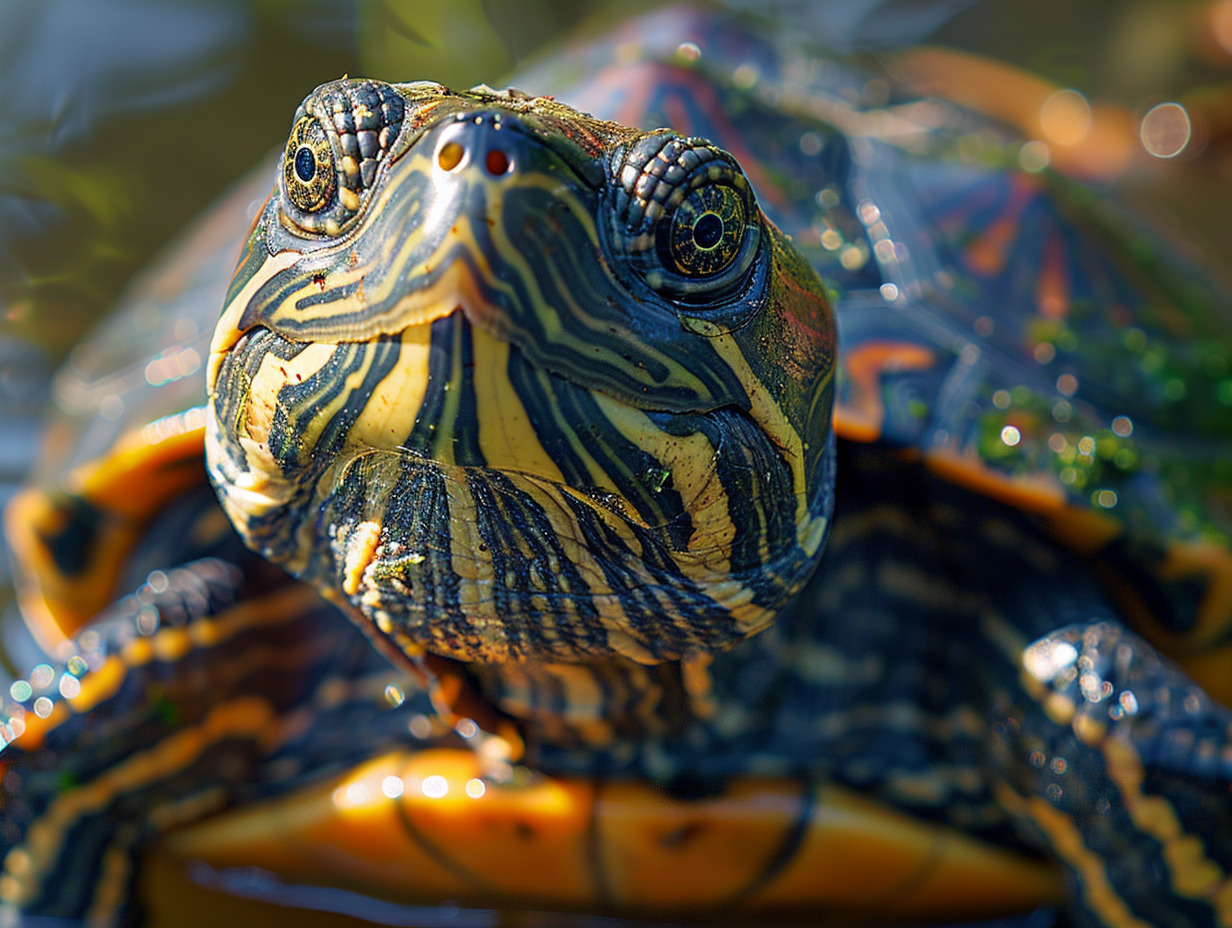
The exceptional ability of turtles to identify their owners deserves a detailed exploration of the underlying mechanisms. Behavioral studies tend to show that turtles, although often perceived as solitary and independent animals, develop bonds with their environment and, by extension, with the humans who are part of it. These ancient creatures, whether domestic species or from the wild, seem to use mechanisms such as olfactory marking and visual recognition to distinguish their caregivers or owners.
Freshwater turtles and exotic turtles, such as the European pond turtle, are notably protected on national territory. The provisions of the environmental code strictly govern their keeping, requiring in-depth knowledge from the keepers. These provisions aim to ensure a living environment that respects the biological needs of the animal, thereby facilitating their ability to adapt and potentially recognize the people around them.
Scientists, like Jean-Yves Georges, have scrutinized turtle behavior to understand their ability to interact with humans. The loggerhead turtle, for example, although primarily encountered in marine waters, shows signs of recognition towards specific individuals, especially when it comes to their regular caregivers. This observation leads to questions about the extent of these animals’ cognitive abilities and how they perceive their immediate environment.
The diversity of turtles leads to variability in recognition modalities. Some individuals may develop marked preferences for certain people, while others seem less sensitive to human presence. Consider that the interactions between turtles and humans are inseparable from the context in which they occur; an animal evolving in a stimulating and enriching environment will be more likely to show signs of recognition. It is by understanding these mechanisms that we can truly appreciate the complexity of the relationships woven between turtles and their human surroundings.