
The distinction between a wide and regular fit at Hoka is not just a simple addition of volume in the upper. It is based on modifications to the shape (the “last”) that affect the forefoot, midfoot, and sometimes the arch, with direct consequences on running biomechanics.
Shape and last Hoka: what really changes between wide and regular
The regular last from Hoka follows a slightly curved geometry, with a forefoot calibrated for a standard width foot. In the wide models (suffix “W” or “2E” for men, “D” for women), the widening mainly affects the toe box and midfoot, not the heel.
This technical distinction is important. A runner who feels lateral compression at the fifth metatarsal does not have the same need as a runner whose foot “overflows” along its entire length. The wide Hoka addresses the first case, not the second.
We observe that the midsole remains identical between the two versions on most models (Clifton, Bondi, Mach). The rocker geometry, cushioning thickness, and drop do not change. Only the upper and insole are adapted. To delve deeper into the topic, we have compiled tips for choosing Hoka wide or regular that detail these variations model by model.
The additional internal volume of the wide translates into an increase in width space, but also in height at the toe box. On a wide Clifton, the mesh upper stretches more vertically, relieving feet with a bunion or claw toes.
Foot width and Hoka size: two parameters not to confuse

Size manages length, width manages volume. Moving up half a size to compensate for a fit that is too narrow is a common mistake that undermines heel support and creates excess length conducive to blisters.
To determine if you fall into the wide category, the relevant measurement is the circumference of the forefoot at the metatarsal heads, not just the width laid flat. A high-arched foot with significant dorsal volume may require a wide even if its measured width on the ground remains within normal limits.
Hoka does not publish a width/size matching chart as detailed as New Balance (which offers letters from B to 6E). The brand limits itself to two options: regular and wide. This choice simplifies the range but forces the runner to decide without intermediate gradation.
When regular is enough despite a wide foot
On certain models with a naturally generous fit (Bondi, Arahi), the regular version already offers above-average volume. We recommend testing the regular of these references before switching to wide, especially if the sensation of compression only appears after several kilometers of running.
The stretchy mesh used on the Clifton and Mach gradually yields under foot pressure. A fit that seems snug during fitting can become comfortable after two or three outings.
Hoka wide fit in trail: specific constraints
In trail running, the need for lateral support directly conflicts with the comfort of a wide fit. A foot that is too free in the shoe slips on uneven surfaces, increasing the risk of sprains and shearing at the nails.
The wide in trail is suitable for wide feet that suffer on descents, when the compression of the forefoot against the rock guard causes subungual hematomas. On the Speedgoat in wide version, the lateral reinforcement partially compensates for the loss of support, but the lacing must be adjusted tighter on the midfoot.
- Forefoot: prefer wide if you notice pressure marks or numbness in the toes beyond an hour of running
- Midfoot: tighten the lacing one notch on the first two eyelets to compensate for the extra volume
- Heel: check that the heel counter remains snug without vertical slipping, as the wide does not alter the heel cup
On trail models without a wide version (Tecton X, Zinal), using asymmetrical lacing or thin merino socks can free up volume without sacrificing support.
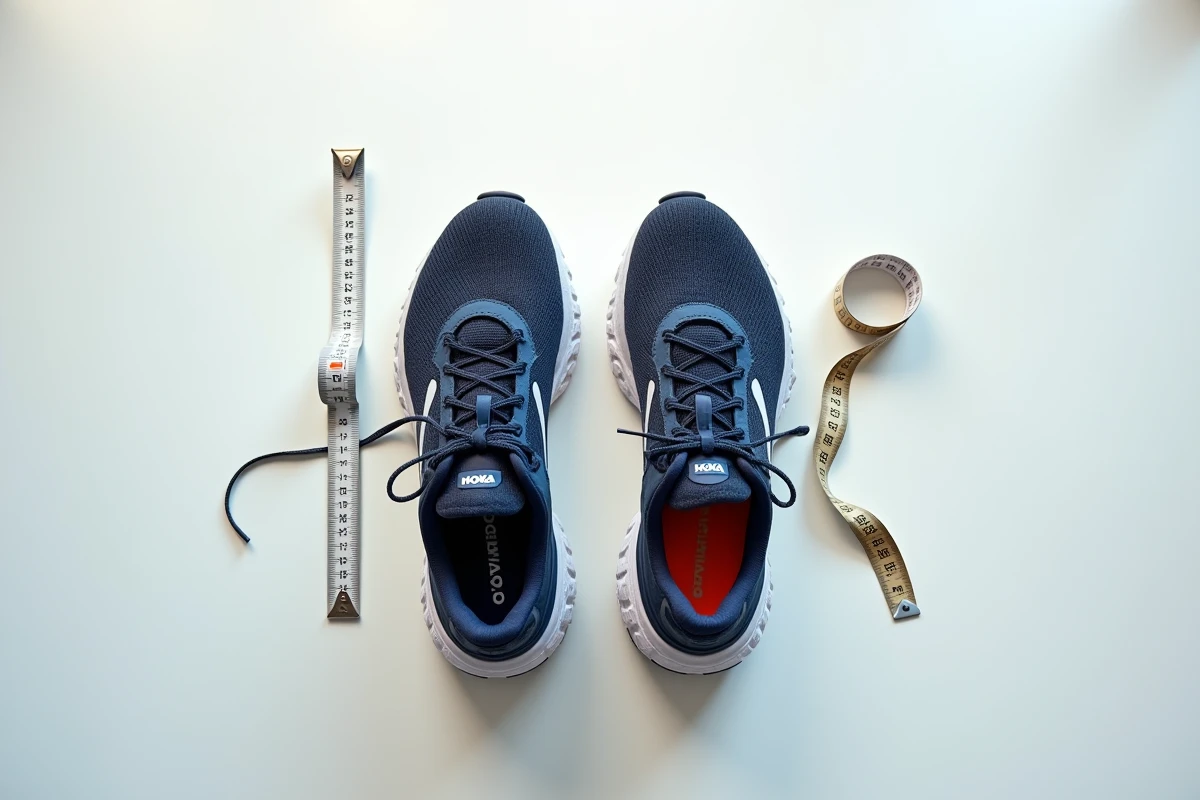
How to test Hoka width before purchase
The most reliable method remains the test of the insole removed from the shoe. Place your foot on it while bearing weight (standing): if your toes or the outer edge of your foot overflow from the insole, the wide is necessary.
This test works in-store as well as at home on a pair ordered online. It eliminates the bias of perception related to the subjective feeling of comfort, which varies according to foot fatigue, the time of day, and sock thickness.
- Test at the end of the day, when the foot has reached its maximum volume
- Wear the sock you use for running (same thickness and compression)
- Check the residual space in front of the big toe: a good thumb’s width of margin in length is still necessary, regardless of width
- Walk for a few minutes and then simulate a running stride to assess foot slip in the shoe
Hoka models available in wide
The wide range does not cover the entire catalog. The Clifton, Bondi, Arahi, and Gaviota are consistently offered in wide version. The Speedgoat also has a wide. However, racing and competition models (Rocket X, Cielo) only exist in regular, which forces runners with wide feet to adapt their shoe strategy on race day.
The choice between wide and regular is based on precise anatomical details, not on a general comfort preference. A properly measured foot, tested on the right insole and evaluated with the appropriate running sock gives a clear answer. In case of persistent doubt between the two widths, the regular of the model with the most generous fit (Bondi or Arahi) often constitutes the best compromise.