
HaynesPro WorkshopData is a technical database designed for automotive garages. It brings together repair procedures, electrical diagrams, maintenance plans, and diagnostic data from manufacturers in a single web environment. The 2026 version, offered as a Business Pack, targets both independent workshops and multi-brand structures that work on light vehicles, utility vehicles, and heavy trucks.
Actual technical scope of HaynesPro WorkshopData for a multi-brand workshop
The unique feature that distinguishes this platform from a simple PDF catalog is its continuous updating of manufacturer data. The procedures follow OEM developments through updates, without the mechanic needing to manually download new files or change software versions.
The coverage announced by Infopro Digital Automotive and the reseller Logicat mentions a database covering several dozen car brands. For an independent workshop that receives both city cars and utility or heavy trucks, this VL/VU/PL scope avoids the need to accumulate multiple subscriptions to separate sources.
This point deserves to be emphasized: many garages still operate with one tool for electrical diagrams, another for labor times, and a third for reset procedures. HaynesPro consolidates diagrams, labor times, and diagnostics into a single interface, which reduces the time spent navigating between multiple sources during an intervention.
A detailed feedback on HaynesPro WorkshopData 2026 allows for a concrete assessment of these daily gains in a general workshop.

VESA System: guided diagnostics and error reduction in the workshop
The VESA (Vehicle Electronic Smart Assistant) system is the most differentiating component of the Business Pack. Its principle is based on a step-by-step guided diagnosis that directs the technician toward the probable cause of a failure based on the observed symptoms.
Specifically, the technician selects the vehicle, describes the symptom, and VESA proposes a decision tree. Each branch leads to the actions to be taken, the expected values, and the components to check. This approach avoids the common reflex of replacing a part based on intuition before confirming the diagnosis.
What VESA changes in managing complex failures
On recent vehicles, the intertwined electronic systems make deduction-based diagnosis increasingly risky. A faulty sensor can generate fault codes on several control units with no apparent relationship between them.
VESA structures the approach by isolating the relevant circuits through the interactive wiring diagrams integrated into the platform. The technician clicks on a component in the diagram and directly accesses reference values, connectors, and physical locations on the vehicle.
For a garage that deals with electrical or electronic failures several times a week, this approach significantly reduces diagnostic time and limits unnecessary parts replacements.
OEM manufacturer data and reliability of repair procedures
The mention of “OEM manufacturer data” frequently appears in communications about HaynesPro. In practice, this means that the procedures, torque specifications, fluid quantities, and maintenance intervals come from the technical manuals of original equipment manufacturers.
The maintenance procedures follow manufacturer revisions, including for recent models whose intervals or fluid specifications have changed after market release. This tracking is particularly useful for vehicles under manufacturer warranty serviced outside the official network, where any procedural error can lead to a refusal of coverage.
Comparison with free technical sources
Forums and community databases sometimes provide useful information, but rarely updated or verified against OEM data. The discrepancies often concern details that change everything:
- Torque specifications modified between two model years of the same engine, a frequent source of damage to aluminum cylinder heads
- Different quantities of oil or coolant depending on the exact engine configuration, while the commercial model remains the same
- Purge or reset procedures specific to a version of the control unit, absent from generic guides
A subscription to a reliable OEM database does not replace the technician’s expertise, but it provides a verified foundation on which to base each intervention.
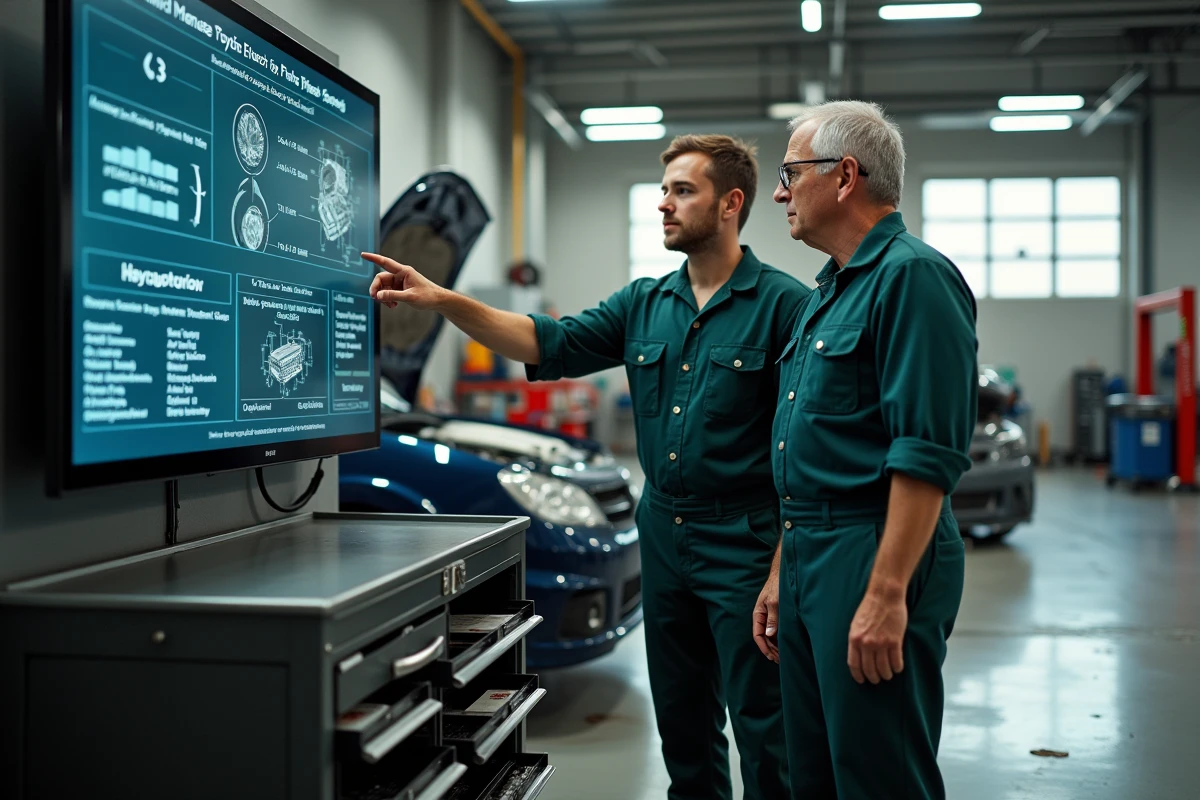
Web interface and integration into the daily workflow of the garage
HaynesPro WorkshopData operates via web access, without local software installation. This architecture presents a concrete advantage: the technician accesses data from any workstation or tablet connected to the internet, directly in the work area.
Vehicle identification can be done by license plate, VIN, or manual selection (make, model, engine). Searching by license plate speeds up the intake process, especially at reception where the time spent identifying the correct technical sheet impacts the overall productivity of the workshop.
Points to check before subscribing
The Business Pack generally includes all modules (Tech, Electronics, PL data), but offers vary by reseller. Before committing, several criteria deserve direct verification:
- The number of simultaneous workstations included in the subscription, as a three-lift workshop with only one access creates a bottleneck
- The actual coverage of brands handled by the workshop, especially for Asian manufacturers or niche utility vehicles
- The availability of a free trial period, offered by some resellers like Logicat in the form of a few days of access without commitment
- The compatibility with existing workshop management tools, to avoid double entry of repair orders
The cost of an annual subscription represents a significant budget item for a small garage. The return on investment is primarily measured in saved diagnostic time and errors avoided on incorrectly ordered parts. A workshop that regularly bills for complex diagnostics will recoup the tool’s cost more quickly than a garage specialized in routine maintenance.