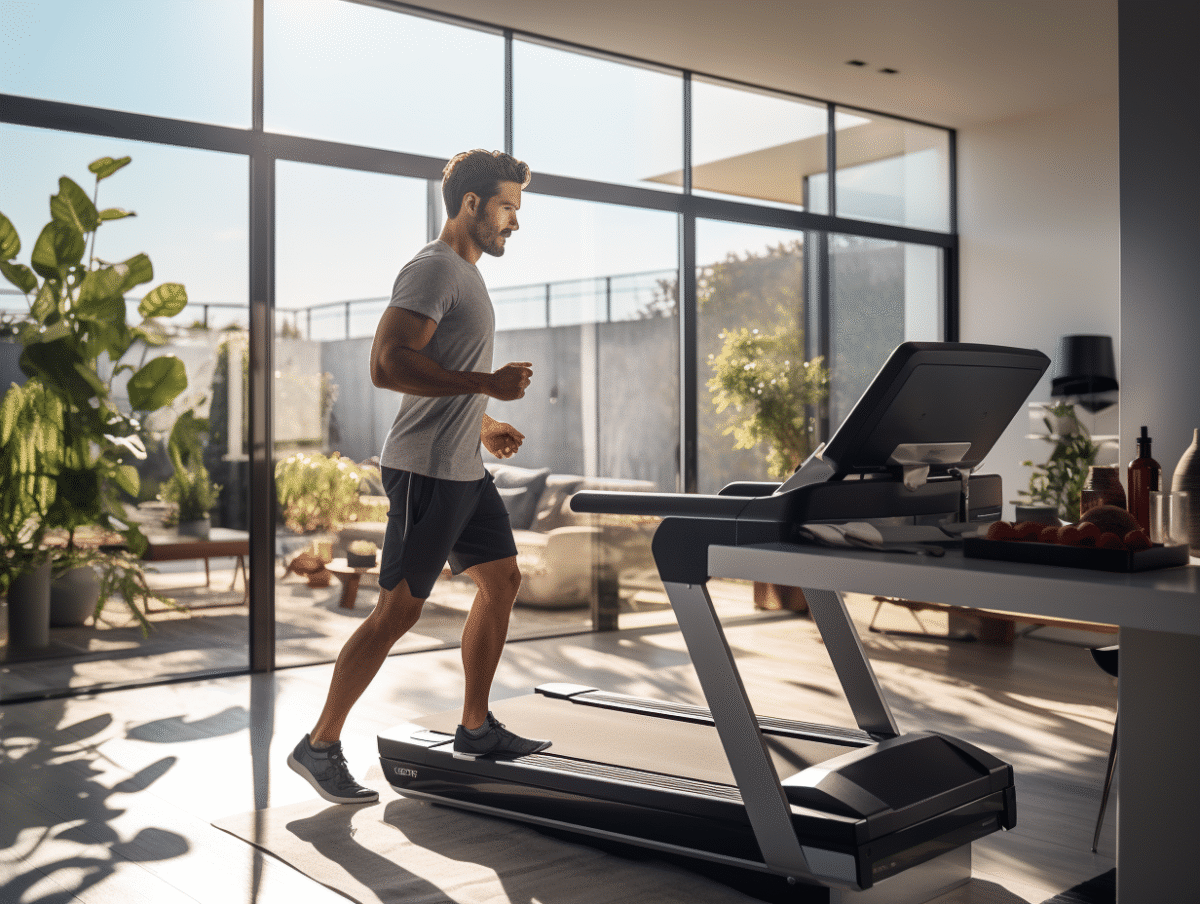
When it comes to staying fit at home, the treadmill remains a must-have for fitness enthusiasts. The eternal dilemma between manual and electric models can pose a real challenge. On one hand, the manual treadmill, often more affordable and known for providing a more natural running experience, relies on the user’s strength to move the belt. On the other hand, the electric treadmill, with its programmable settings and ease of use, offers a more comfortable experience but requires a larger investment and involves electricity consumption to consider. Each option has its distinct advantages and limitations, influencing the choice based on personal preferences and training goals.
Detailed comparison: manual vs electric treadmill
The comparison of manual and electric treadmills must begin with a clear distinction: the manual treadmill is powered by the user’s leg strength, which implies a higher initial energy expenditure and a more intense muscle engagement. It is a preferred option for those seeking an authentic running and walking experience. In contrast, the electric treadmill uses a motor, making it easier to start running and offering a variety of speeds that can be adjusted according to the desired workout.
The question of training becomes more complex when addressing incline and cushioning. Electric treadmills often stand out for their ability to vary the incline, allowing users to simulate hilly courses and increase the difficulty of the workout. Cushioning, on the other hand, is an essential aspect that reduces impact on the joints during running, a benefit that modern electric models tend to optimize with advanced technologies. These features, combined with a console offering training programs and connectivity for precise performance tracking, give electric treadmills an appealing technological aspect.
The running surface must be examined, regardless of the chosen technology. It should be suitable for the user’s stride to ensure comfort and safety. The maximum user weight also influences the choice of motor, as it determines the maximum speed and durability of the device. Heavier users will require more powerful motors to maintain optimal performance; thus, the choice between these two types of treadmills should be guided by a rigorous analysis of individual needs, both in terms of exercise intensity and expectations regarding technology and comfort.

Buying guide: how to choose based on your needs
In order to select the most suitable treadmill for your sports activities, whether focused on running or walking, analyzing your requirements is crucial. The running surface, in particular, must be adapted to the stride of each user to ensure optimal comfort and prevent any form of discomfort or injury. The choice between a manual treadmill and an electric treadmill should therefore be made considering your training habits and body type.
Incline is another key criterion for aspiring runners looking to vary their workouts and intensify their training. While manual treadmills may be limited in this regard, electric versions generally offer a range of options to adjust the incline angle. This translates to simulating uphill courses, resulting in a significant increase in difficulty and greater engagement of different muscle groups.
As for cushioning, it is an essential element, particularly for users suffering from joint pain or wishing to minimize the risk of injuries. Electric treadmills, often equipped with sophisticated cushioning systems, have the ability to reduce impacts on the joints during the stride. For regular runners or athletes in recovery, this feature can be decisive in the choice of equipment. Knowing your goals, assessing your physical condition, and understanding the specifics of each type of treadmill will guide you toward acquiring the right equipment that precisely meets your needs and aspirations for sports training.